How it works
The whole journey, in order
Seven screens, and this is what each one is for — from the first egg to the game at the end.
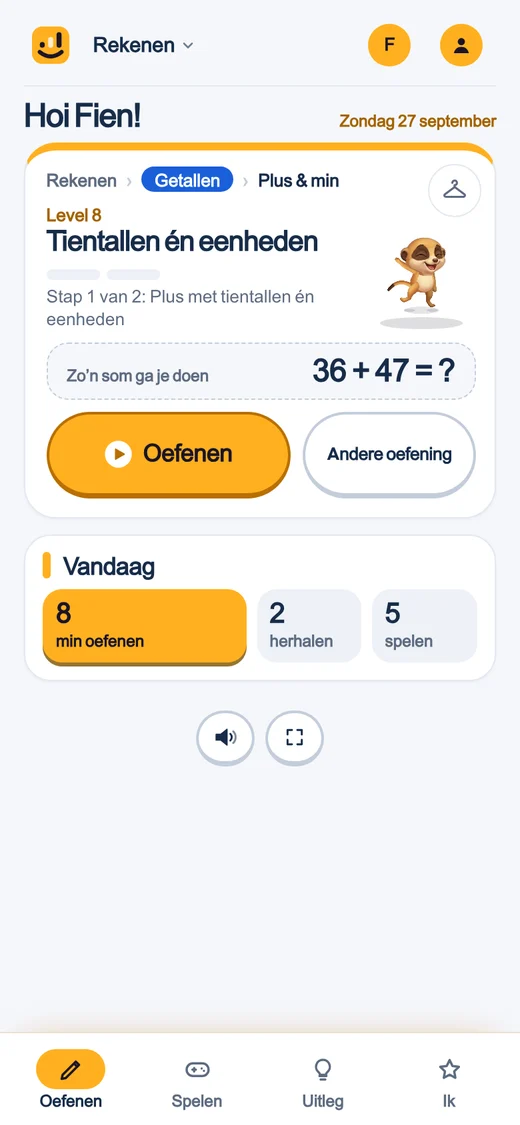
You startOne animal, one name, one world. That takes a minute, once. 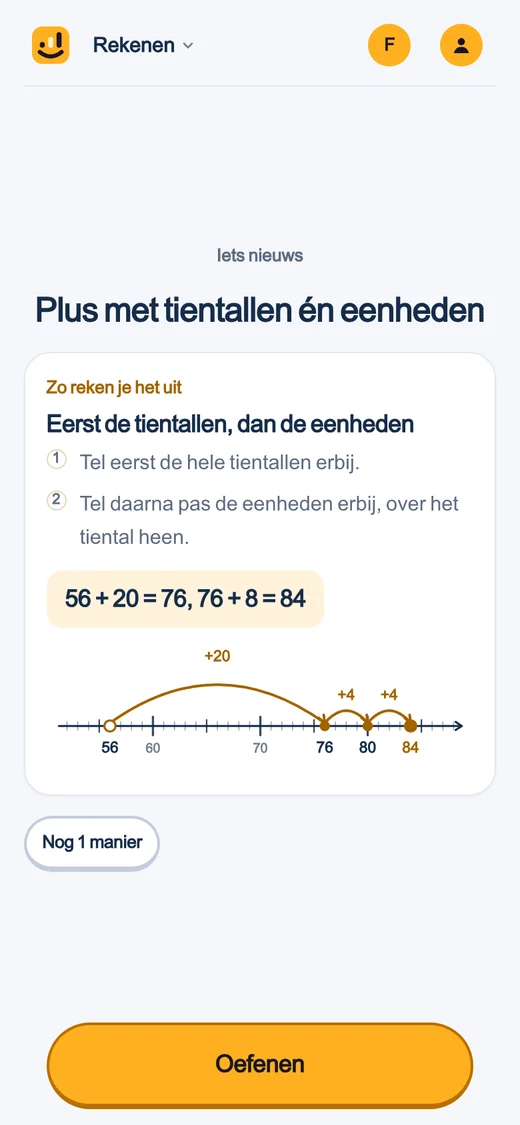
The approachEvery question comes with a strategy — never a bare sum with nothing to hold onto. 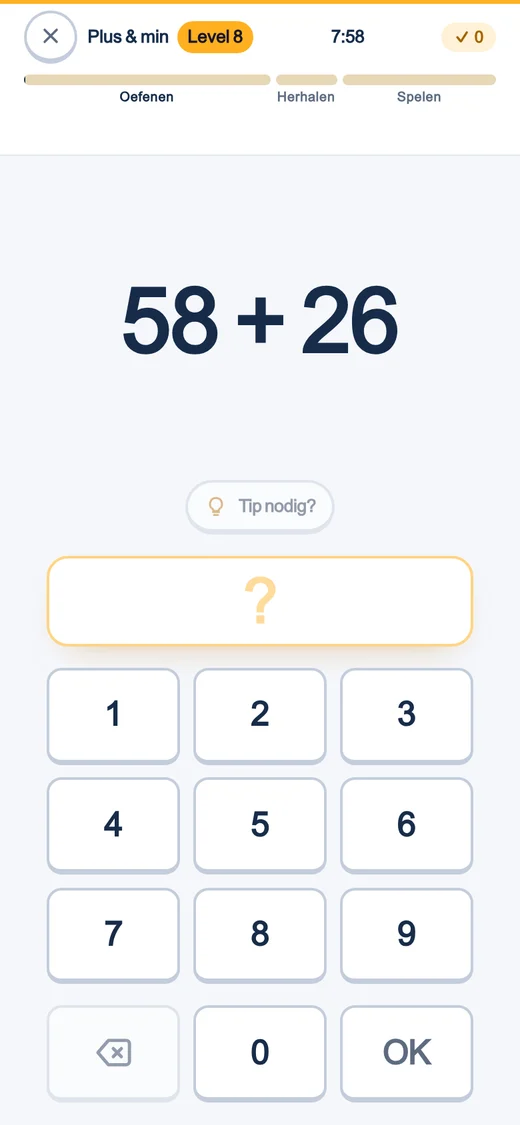
You practiseOne question at a time, on paper-white and ink-black. You type or tap the answer yourself. 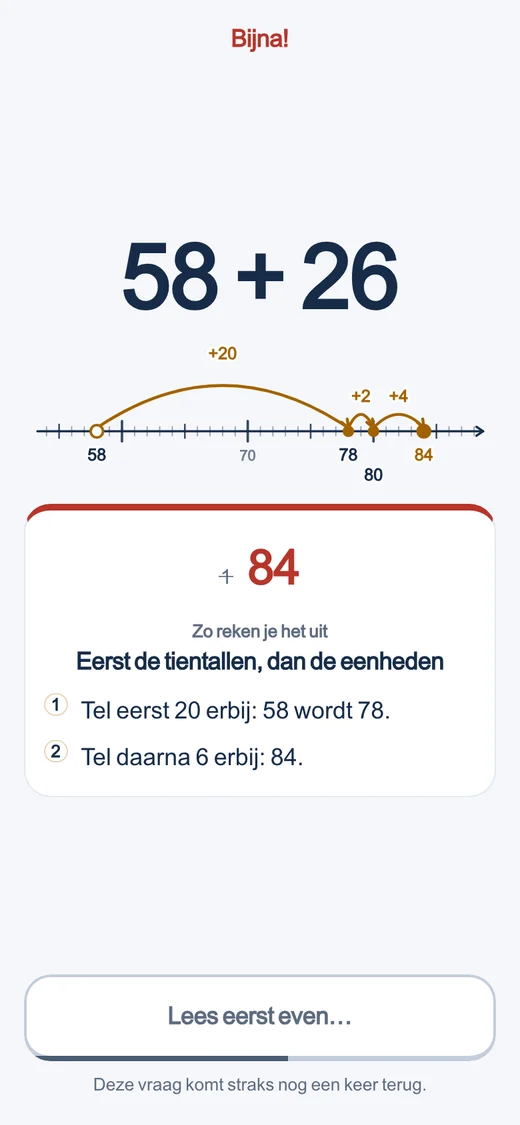
A mistakeThe screen turns, the right answer appears with the reasoning, and that question comes back later. 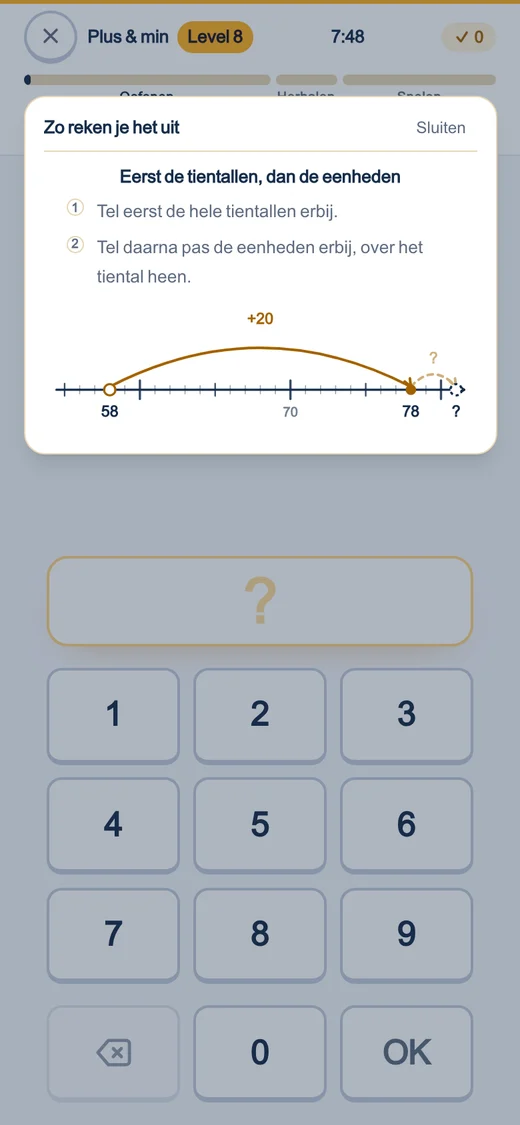
A step in betweenStuck? A worked step appears — never the answer itself. 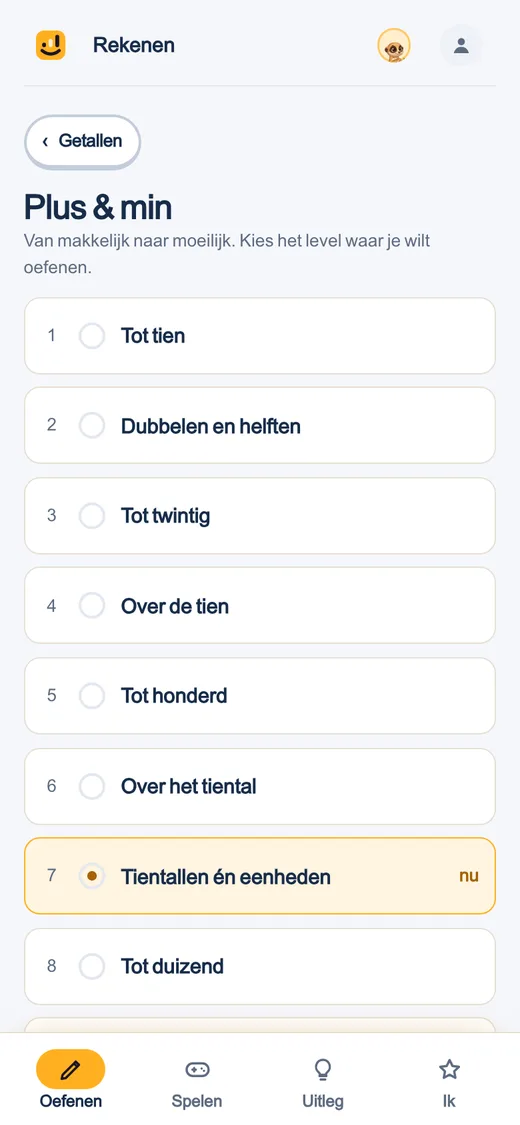
Your pathWhere you stand, what is next, and what you already know by heart. 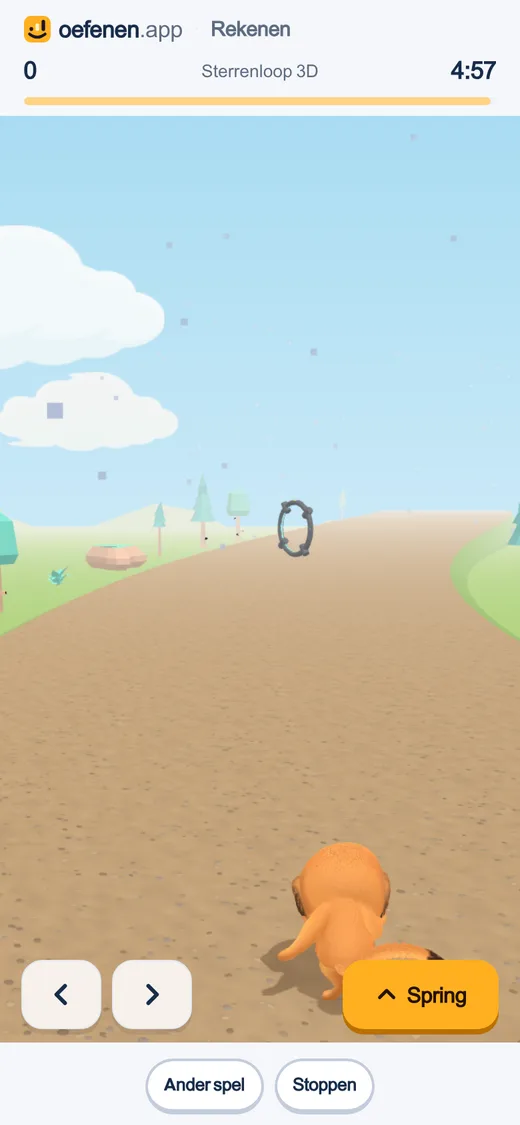
You playOne coin buys one game — your own animal is in it.
The session
Not a number of questions — a time
A row of fifteen sums can be rattled through; 8 minutes cannot, because answering faster does not finish it any sooner.
8 min · Practise
Focused, adaptive — what is not yet automatic.
2 min · Review
Mixed through, over everything ever practised.
5 min · Play
Earned, five minutes, one game per coin.
Repeats up to 3 times a day, then the app locks until tomorrow.
The heatmap
From working it out to knowing it
Every fact climbs the same ladder. Nothing turns green on luck: it takes real accuracy, and an answer faster than a few seconds.
Neither a parent nor a teacher ever sees this ladder as a grade — it decides which question comes next, and nothing else. The full argument, with its sources, is on the evidence page.
The placement test
A few questions find the right level
Once per chosen path: 5 questions spread across it, then a few more that follow how it goes — at most 15 in total. From that the app knows where to begin, and moves a step up or down with one line of explanation why.
The engine
Every answer adjusts the level
Underneath the colour, a model tracks how likely it is that a fact is known and how likely it is that it is remembered instantly, and it moves a step up or down per learning line with every answer — how fast, how often right, and which in-between step still catches. It never changes the colour itself: that keeps counting the same three plain numbers a parent and a teacher see.
The arcade
Rest, not another lesson
Every game is open to look at, always. The lock sits on the start button, not on the cupboard: you need one coin, and one coin buys 5 minutes.
The super coin
Earned by turning up, not by being right
5 days in a row, at least once, and there is a super coin — it opens the one game built in 3D. It does not stack, and it rewards showing up, never being right.
Live
The same practice, together on a board
A teacher — or a parent, at home — can put a game on a shared board: a race, a mountain, a gold hunt. Every child still answers with their own sums, at their own level, on their own laptop; the board only turns that into a shared spectacle, with items and a final lap, never a leaderboard of who is best. What is practised folds into the same heatmap as any other session.
The material is never "done"
This product automates and maintains: the review keeps returning to everything once practised, and a part called "done" is a part a child never comes back to. So nothing here ever says "done" about the material — the measure is what you know by heart.
- No leaderboard, no comparison with other children.
- No score — a position: what is automatic, what is not yet.
- The streak counts turning up, not being right.